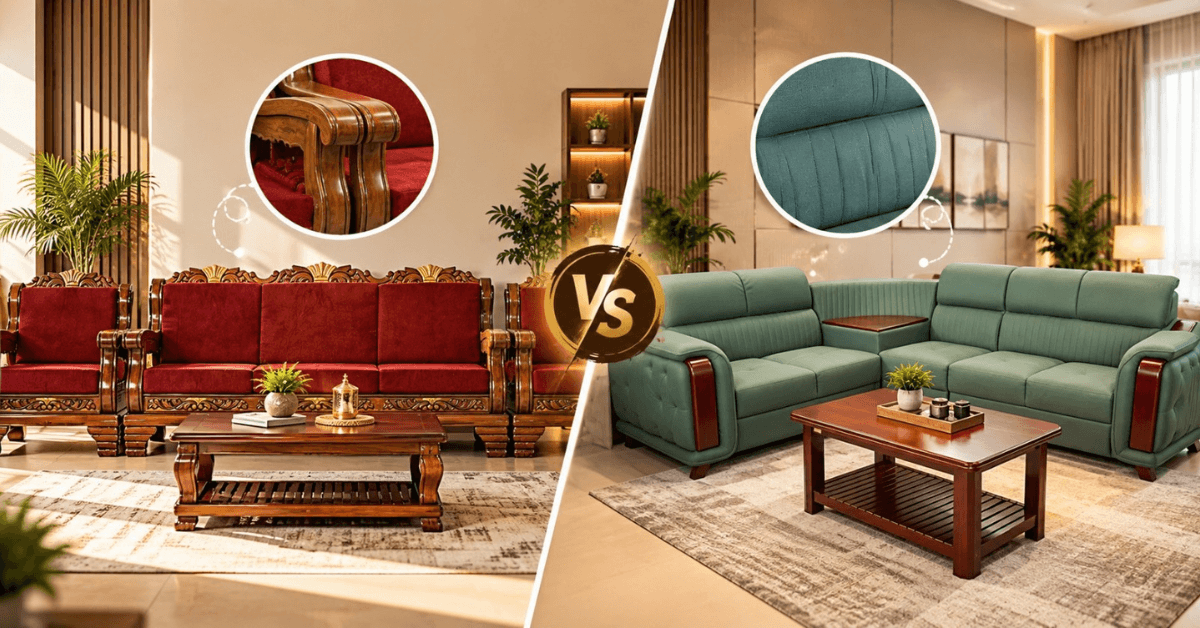
Wooden Sofa vs Fabric Sofa: Which Is Better for Your Home?
Comparing a wooden sofa and a fabric sofa? See the pros, cons, comfort, cost and maintenance of each to choose the right sofa for your home.
Read More
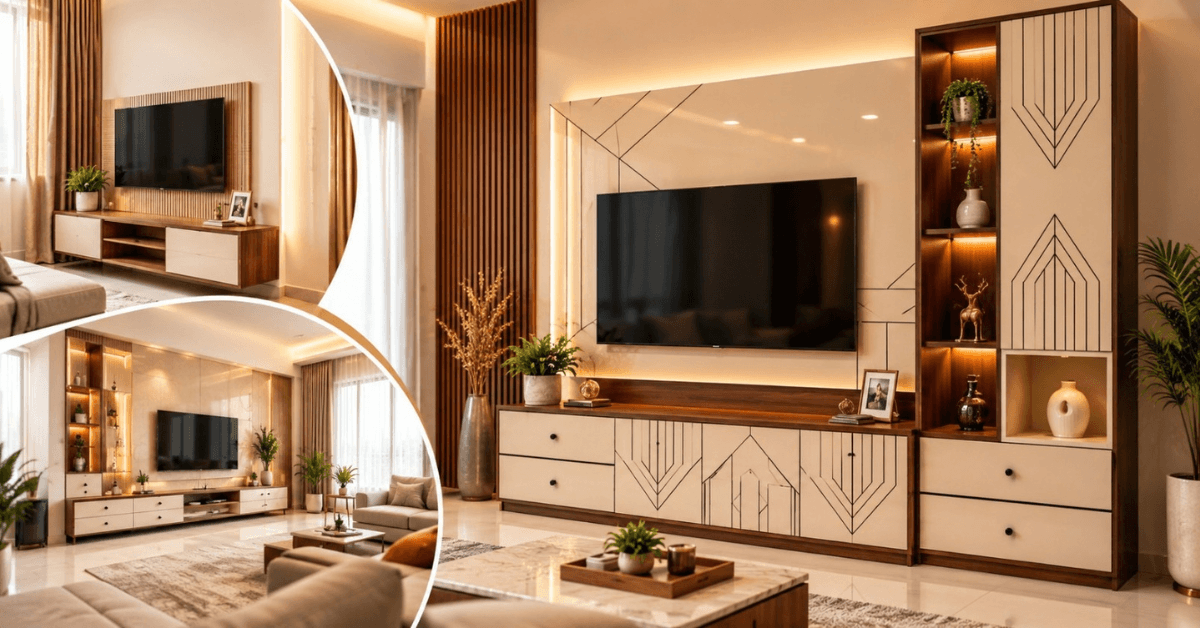
The TV unit is often the first thing your eyes land on when you walk into a living room. It holds your television, hides messy cables, stores your media gear and sets the style for the entire space. Yet many people buy one based on looks alone and realise later that it is too bulky for the room, too small for the screen, or too shallow to hold anything useful.
The good news is that choosing the right TV unit is far easier when you start with your room size. This guide walks you through measurements, viewing distance, layout and storage so that the unit you bring home looks balanced and works well for years.
Before you browse a single catalogue, pick up a measuring tape. Note the width of the wall where the TV will sit, the ceiling height, and the distance from that wall to your main seating. Also mark doors, windows, switchboards and any AC or radiator positions, because these can block a unit or limit how high it can go.
A simple rule helps: leave at least 2 to 3 feet of free walking space in front of the unit, and avoid covering more than two thirds of the wall width. A unit that swallows the whole wall makes even a large room feel crowded, while a tiny unit on a huge wall looks lost. Write your numbers down and carry them with you when you shop, whether you are visiting a showroom or browsing a TV unit collection online.
In compact living rooms and studio apartments, every inch counts. The goal is to get storage and style without eating floor space. Look for these options:
Avoid heavy, dark and deeply carved designs in a small space. They tend to dominate the room. Keep the top of the unit clear or style it with just a plant and a couple of décor pieces so the wall does not feel busy.
Medium living rooms give you more freedom. A floor-standing unit between 5 and 7 feet wide usually suits this size well. You can combine a central TV panel with side cabinets, or choose a low unit with drawers for remotes, gaming consoles and board games.
This is also the size where a combination of open shelves and closed cabinets works best. Open shelves let you display books, photo frames or indoor plants, while closed doors hide routers, set-top boxes and everyday clutter. Because the room can handle some visual weight, you can choose richer wood tones or a two-tone finish without worry.
In a spacious hall you can think of the TV wall as a feature wall. Full-wall entertainment units with a back panel, LED strip lighting, display niches and tall side towers look impressive and provide lots of storage. A wide unit of 8 feet or more keeps the proportions right against a long wall.
With bigger rooms, the challenge is scale. A small unit here will look undersized, and a large TV needs a matching base to feel anchored. If your living room doubles as a dining or family lounge, consider a unit that also works as a room divider or blends with your other living room furniture so the whole area feels connected.
Your screen size and how far you sit from it should guide the unit dimensions. As a general guide, a comfortable seating distance is roughly 1.5 to 2.5 times the screen diagonal. A 55-inch TV, for example, works well when you sit about 7 to 11 feet away. If your sofa is only 6 feet from the wall, a 43 or 50-inch screen may be a better match.
When it comes to the unit itself, follow these pointers:
Solid wood such as sheesham or teak offers durability and a classic look, and it handles the weight of modern large televisions with ease. Engineered wood with a good laminate or veneer finish can be a wallet-friendly alternative, provided the boards are thick enough to avoid sagging over time. Whatever you choose, check the load rating of the shelves and the quality of hinges and drawer channels.
Think honestly about what you need to store. Families with kids may want closed cabinets to keep toys and games out of sight. Movie lovers might need space for a soundbar, an AV receiver and a streaming box. A well-planned storage furniture setup in the TV area also means fewer extra cupboards elsewhere in the room, which is a real advantage in small homes.
Nothing spoils a neat TV wall like a tangle of wires. Look for units with cut-outs or a hollow back panel so cables can pass through discreetly. Electronic devices also produce heat, so make sure any enclosed compartment has ventilation openings or an open back. This small detail protects your equipment and extends its life.
Once size and function are settled, choose a style that matches the rest of your room. Modern homes suit clean lines, handle-less doors and matte finishes. Traditional homes look lovely with warm wood tones and subtle carving. If your walls are light, a darker unit creates contrast. If your walls are bold, keep the unit simple and neutral.
Lighting can lift the whole arrangement. Soft LED strips behind or under the unit add depth and reduce eye strain when you watch TV in the evening. Avoid placing the screen directly opposite a large window, since glare can make it hard to see during the day.
The right TV unit is not the biggest or the most expensive one. It is the one that fits your room, supports your screen and gives you just enough storage to keep life tidy. Start with your measurements, respect the proportions of your space and choose materials that will last. If you would like help finding a unit that suits your home, our team will be happy to guide you.
Comparing a wooden sofa and a fabric sofa? See the pros, cons, comfort, cost and maintenance of each to choose the right sofa for your home.
Read More
Learn simple, practical tips to clean, polish and protect your wooden furniture from moisture, sunlight, scratches and pests.
Read More
Explore the best office furniture for startups, established companies and home offices, including chairs, desks, storage and layout tips.
Read More