
Wooden Sofa vs Fabric Sofa: Which Is Better for Your Home?
Comparing a wooden sofa and a fabric sofa? See the pros, cons, comfort, cost and maintenance of each to choose the right sofa for your home.
Read More
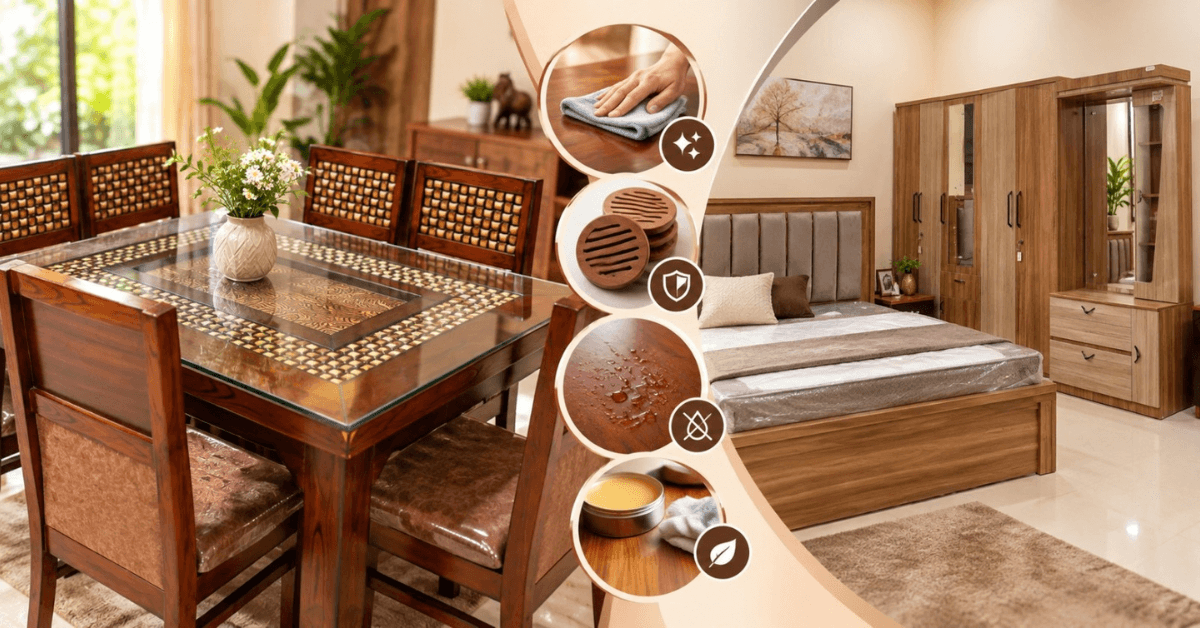
Wooden furniture is an investment. A well-made dining table, bed or cabinet can serve a family for decades and even pass on to the next generation. But wood is a natural material, and it reacts to its surroundings. Heat, humidity, sunlight, spills and everyday wear all leave their mark if the furniture is not looked after properly.
The encouraging part is that caring for wood is not complicated. A few simple habits, practised regularly, can keep your furniture looking fresh and solid for years. This guide covers everything you need to know, from daily dusting to repairing scratches and protecting against pests.
Before you clean or polish anything, find out what kind of wood and finish you are dealing with. Solid woods such as teak, sheesham and mango wood are dense and durable, while engineered wood has a veneer or laminate surface over a board core. The finish also matters. Lacquered or polyurethane finishes form a protective layer on top, while oil finishes soak into the wood and need different care.
If you are unsure, check the care instructions that came with the piece or ask the seller. A quick test in a hidden area with a little cleaner will show whether the product is safe for your finish. Knowing this saves you from damage caused by the wrong product.
Dust may look harmless, but it acts like fine sandpaper. When you wipe a dusty surface with a dry rough cloth, tiny particles scratch the finish over time. Dust your furniture once or twice a week with a soft microfibre cloth. Move in the direction of the wood grain and avoid pressing hard.
A slightly damp cloth works well for heavier dust, but wring it out thoroughly and dry the surface right away. Avoid feather dusters with loose fibres and never use abrasive pads or scouring powders on wood.
For routine cleaning, a mild solution of warm water and a few drops of gentle liquid soap is usually enough. Dip a soft cloth, squeeze it until barely damp, wipe the surface and follow immediately with a dry cloth. Never let water sit on wood, because moisture can cause swelling, white marks and peeling.
Avoid harsh household cleaners containing ammonia, bleach or strong solvents. They strip the finish and can leave patches. Also be careful with spray polishes containing silicone, which can build up and leave a cloudy film that is hard to remove.
Spills are the most common cause of stains on dining and centre tables. The key is speed. Blot liquid with a clean absorbent cloth as soon as it happens, pressing rather than rubbing so the liquid does not spread. Then wipe with a slightly damp cloth and dry completely.
For water rings caused by hot or cold glasses, try placing a soft cloth over the mark and gently pressing a warm, not hot, iron for a few seconds, or rub a small amount of non-gel toothpaste on the ring with a soft cloth. Test on a hidden spot first, and stop if the finish looks affected.
Direct sunlight fades and dries wood, leading to colour changes and cracks. If your furniture sits near a window, use curtains, blinds or UV-filtering film to reduce exposure. Rearrange the position of pieces occasionally so that fading happens evenly.
Keep wooden furniture away from heat sources such as radiators, heaters and ovens. Always use trivets, hot pads or coasters under hot dishes and mugs. A single hot pan set directly on a polished table can leave a permanent mark.
Wood absorbs and releases moisture with changes in the air. In humid coastal or monsoon conditions it can swell, and in very dry conditions it can shrink and crack. Try to keep the indoor environment stable. Use a dehumidifier or moisture absorbers during the rainy season, and avoid placing furniture right against damp walls. Leaving a small gap of a few centimetres allows air to circulate.
During winter or in air-conditioned rooms, dryness may become a concern, so avoid blowing air conditioning directly on wooden pieces. Sudden changes in temperature and humidity are harder on furniture than steady conditions.
Polishing adds shine and a thin layer of protection, but it should not be overdone. Use a good quality wax or furniture polish suited to your finish about two to four times a year. Apply a small amount on a soft cloth, rub gently along the grain and buff with a clean dry cloth.
Oiled finishes, such as those on teak, benefit from a light coat of suitable wood oil every few months to keep the wood nourished. Too much polish causes buildup, so if the surface feels tacky, stop applying and clean it instead. To see how different finishes look and age, you can browse our wooden furniture range for inspiration.
Many small problems can be avoided with simple habits:
A well-kept dining table, for example, stays beautiful for years simply because of tablecloths, mats and prompt cleaning.
Small scratches can be disguised with a wax repair stick, a touch-up marker or a little walnut rubbed gently along the grain, depending on the colour of the wood. Shallow dents may respond to a damp cloth and a warm iron, which causes the compressed fibres to swell back up. For loose joints, wobbly legs or damaged hinges, tighten screws and apply wood glue where needed.
Addressing small issues early prevents bigger and costlier repairs later. For deep scratches, cracks or peeling veneer, call a professional carpenter rather than attempting a risky fix yourself.
Termites and borers are one of the biggest threats to wooden furniture in India. Keep furniture off damp floors, and keep an eye out for fine powdery dust, tiny holes or mud trails, which signal trouble. Periodic pest-control treatment in your home and using anti-termite products in cupboards and storage areas provide extra protection.
Wiping your furniture with neem oil, or keeping neem leaves or camphor in drawers, is a traditional method that many homes still rely on. If you notice an infestation, isolate the piece and seek professional help quickly.
Wooden furniture rewards the effort you put into it. Regular dusting, gentle cleaning, protection from sun and moisture and quick action on spills will keep it beautiful and strong for decades. Good upkeep also begins with good quality, so choose well-made pieces from a trusted maker. To learn more about our craftsmanship and the materials we use, visit our about us page, and enjoy your furniture for many years to come.
Comparing a wooden sofa and a fabric sofa? See the pros, cons, comfort, cost and maintenance of each to choose the right sofa for your home.
Read More
Explore the best office furniture for startups, established companies and home offices, including chairs, desks, storage and layout tips.
Read More
Not sure which TV unit fits your living room? Learn how to pick the right size, style and storage for small, medium and large rooms.
Read More