How to Maintain Wooden Furniture and Make It Last Longer
Learn simple, practical tips to clean, polish and protect your wooden furniture from moisture, sunlight, scratches and pests.
Read More
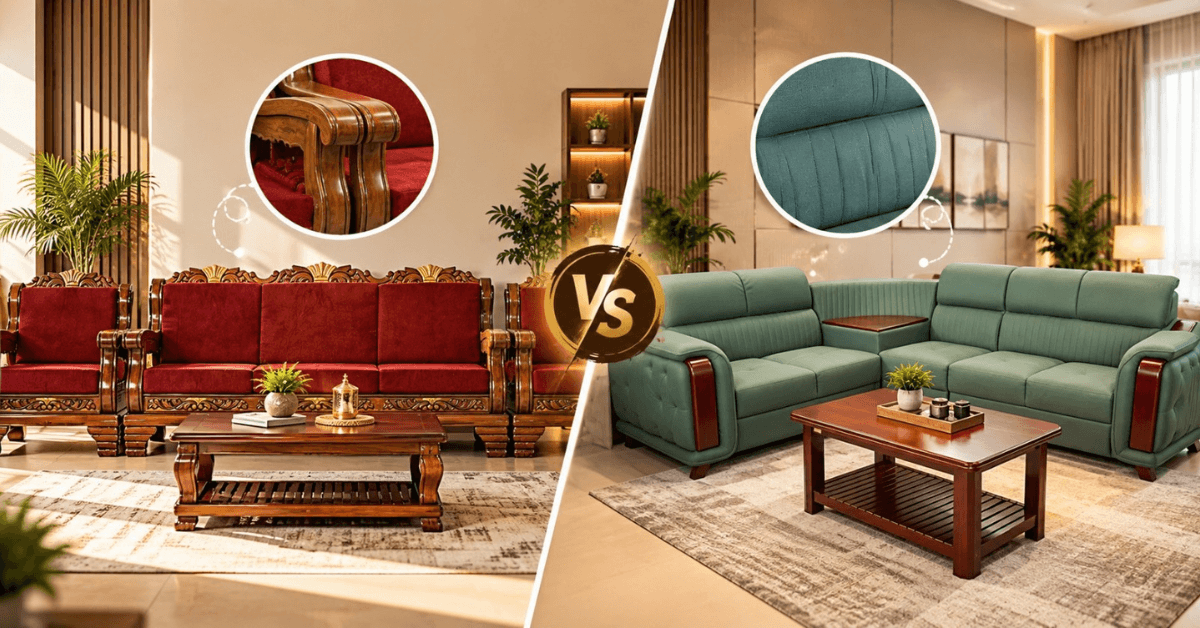
The sofa is the heart of the living room. It is where families relax, guests are welcomed and many lazy weekends are spent. So when it is time to buy a new one, the choice between a wooden sofa and a fabric sofa can feel surprisingly big. Both look good, both are popular, yet they feel and behave very differently in daily life.
There is no single winner, because the best sofa depends on your home, your lifestyle and your budget. This guide compares the two across comfort, durability, style, maintenance and cost, so you can decide with confidence.
A wooden sofa has a visible solid wood frame, often made from teak, sheesham or mango wood, with cushions placed on the seat and back. The wood is a design feature in itself, with carved arms, clean slatted backs or polished legs. Wooden sofas are a long-standing favourite in Indian homes, valued for their sturdy build and timeless appeal.
A fabric sofa, also called an upholstered sofa, has a hidden frame covered in padding and finished with fabric such as cotton, linen, velvet, chenille or a synthetic blend. The emphasis is on softness and on colour and texture. These sofas come in a huge range of shapes, from compact two-seaters to large L-shaped sectionals.
Fabric sofas usually win on instant softness. Their foam or fibre padding wraps around you and invites you to sink in, which makes them ideal for long movie nights and lounging. Deep seats and loose cushions add to the cosy feeling, though very soft padding can sometimes reduce back support.
Wooden sofas tend to feel firmer and more upright. The cushions are important here, because good quality high-density foam makes a huge difference in comfort. Many people find the structured seating more supportive for the back and easier to get up from, which suits elders in particular. If you like to sit upright for conversation and tea, a wooden sofa feels natural.
A well-made wooden sofa can last twenty years or more. Solid wood frames are strong and do not sag easily, and cushions can be replaced or refilled when they wear out. The frame itself stands up to heavy daily use, which is why many families pass wooden sofas down through generations.
Fabric sofas can also last a long time, but their lifespan depends heavily on the frame quality and upholstery. Frames made of engineered wood or weak joints may loosen in a few years. Fabric can fade, pill or tear, and foam loses shape with heavy use. A good fabric sofa typically lasts around seven to twelve years with proper care, though premium builds can go beyond this.
Wooden sofas bring warmth and character. Carved or classic designs suit traditional and ethnic interiors, while clean-lined slatted designs work beautifully in modern and Scandinavian spaces. They pair naturally with wooden centre tables, TV units and dining furniture, creating a cohesive, earthy look. If you want a timeless piece that never feels dated, a wooden design is a safe choice. You can browse a range of wooden sofa sets to see how different styles look in a real home.
Fabric sofas offer more variety in colour, pattern and texture. Whether you like a soft neutral, a bold jewel tone or a trendy boucle, fabric gives you freedom to match your décor or make a statement. Modern shapes like sectionals and chaise lounges are more common in upholstery. You can also change the look with new cushion covers or throws.
Wooden sofas are easy to keep clean. The wooden parts need only regular dusting and an occasional polish, and spills on the frame can be wiped off quickly. The cushion covers are often removable and washable. The main care points are protecting the wood from excessive moisture, heat and termites.
Fabric sofas need more attention. Light colours show stains easily, and spills soak in unless cleaned immediately. Regular vacuuming removes dust and crumbs, and some fabrics need professional cleaning every year or so. Homes with small children or pets may prefer stain-resistant or washable covers, or darker shades and tightly woven fabrics that hide marks. Choosing a removable-cover design makes life much easier.
In humid and warm regions, wood copes well with proper polish and ventilation, and a wooden frame with light cushions stays breathable. Fabric can trap heat and moisture, which may lead to odours or mildew in very humid homes, although breathable cotton and linen help. In air-conditioned rooms, fabric feels cosy and warm, while in hot seasons wood and cane designs feel cooler.
Price depends on materials and workmanship. A solid wood sofa usually costs more upfront because of the quality of timber and labour involved, but its long lifespan often makes it better value over time. Fabric sofas cover a wider price range, from budget options to luxury designs, but cheaper ones tend to need replacing sooner.
Rather than focusing only on the price tag, think about cost per year of use. A sofa that stays in great shape for fifteen years often works out cheaper than one replaced every six. If you are comparing options in the market, it helps to look at a full sofa collection so that you can judge quality, size and finish side by side.
Consider how much room you have and who will use the sofa. Wooden sofas have visible arms and frames that take up a little more visual space, so measure carefully for compact rooms. Fabric sofas, especially modular ones, adapt easily to different layouts and can be rearranged as your needs change.
• Small apartments: A slim wooden sofa with light cushions or a compact two-seater fabric sofa both work well.
• Large families: A sturdy wooden set or a large fabric sectional offers plenty of seating.
• Homes with elders: Firmer wooden seating with armrests is easier to sit on and get up from.
• Homes with kids and pets: Wooden frames with washable, dark-coloured cushions or stain-resistant fabric hold up best.
Can You Combine Both?
You do not have to choose one side completely. Many modern designs combine a solid wood frame with upholstered seats and backs, giving you the strength and style of wood along with the comfort of soft padding. This hybrid approach is popular because it balances durability, comfort and look, and it is often the best choice for families who cannot decide.
Quick Comparison at a Glance
If you value longevity, easy maintenance and a timeless look, a wooden sofa is an excellent choice. If you prefer plush comfort, a wide choice of colours and modern shapes, a fabric sofa may suit you better. For many homes, a wooden frame with quality upholstery offers the best of both worlds. Whichever you pick, focus on build quality, cushion density and proper sizing. Still undecided? You can reach out to Shivankar Furniture for help choosing a sofa that fits your room and budget.
Learn simple, practical tips to clean, polish and protect your wooden furniture from moisture, sunlight, scratches and pests.
Read More
Explore the best office furniture for startups, established companies and home offices, including chairs, desks, storage and layout tips.
Read More
Not sure which TV unit fits your living room? Learn how to pick the right size, style and storage for small, medium and large rooms.
Read More